
Air Show Report : MAKS 2005 Moscow International Aviation & Space Salon

|
Report by Andrew Philpott,
all photos by author
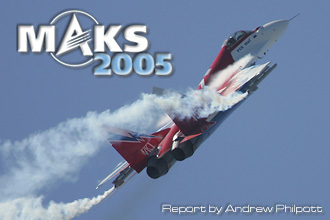
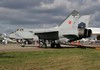
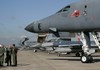
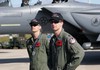
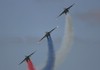
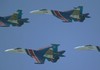
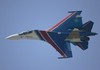
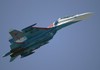
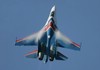
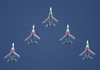
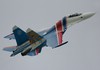
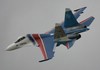
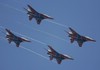
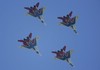
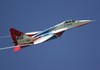
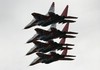
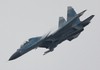
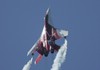
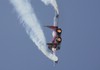
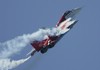
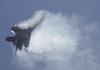
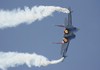
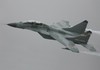
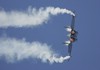
Financial reasons have restricted Russian Air Force equipment from attending airshows in the west for many years. We visited the best place in all of Russia to see military aircraft perform, the MAKS air show. This trade show is held at the test field of Zhukovsky, which is situated approximately one and a half hours South East from the centre of Moscow. Many aircraft types can be seen around the field on numerous parking areas. The shows flight line only uses up half of the runway which is a good indication of the size of the place! Static aircraft included Russian Air Force and Navy. Representing Naval aircraft was a MiG-29K with folding wings and arrestor hook, also a Sukhoi Su-33 Navy Flanker with folding wings plus folding elevator surfaces. Air Force types included an Sukhoi Su-34 Platypus Bomber Flanker, MiG-31 Foxhound long range, high speed interceptor. Plus a MiG-21 Fishbed and various MiG-29 Fulcrum and Su-27 Flanker Squadron machines. American aircraft in the static display included a pair of 494th Fighter Squadron F-15E Strike Eagles based at Lakenheath. One of the pair having a multi striped tail fin indicating a Commanders machine. The only pair of F-16C aircraft at the show belonged to the 22nd FS based at Spangdahlem in Germany. The flying display begun with a formation of three Sukhoi Su-25 Frogfoot aircraft trailing the colours of the national flag, red, blue and white. Then to follow was the Russian Knights display team. Flying four single seat Su-27 Flankers, and the solo aircraft being a two seater aircraft. Performing tight turns and loops in formation, mid way through the routine the solo Su-27 Flanker straightens up from a turn formation and thunders away to hold while the remaining four Flankers continue the display. After the four break from formation toward the crowd line, the solo two seater returns to finish the remainder of the display. Russian performances are notorious for using flairs during their manoeuvres, the solo Flanker fulfilled this anticipation by firing flairs while executing a barrel roll in reheat rolling away from the crowd! Fast reheated passes seemed to be absent from the display routines due to fuel wastage but the noise was supplied by high G turns with vapour boiling off upper wing surfaces! The second fast jet display team of Russia is the Swifts consisting of five MiG-29s painted in red, white and blue. A bird out line is depicted on the upper and lower surfaces of the aircraft. The display routine is similar to the Russian Knights with the team flying loop, roll, turn manoeuvres in close formation. Other aerobatic display teams to participate were the French team, Patrouille de France and and the Italian team, Frecce Tricolori. The only long range bomber to participate everyday in the flying was an American B-1B Lancer. Most spectators didn’t seem bothered about the noisy bomber. Maybe the crowds assumed the B-1B was fitted with a hush kit in comparison to Russian supersonic bombers! But forget all the display teams, the most interesting thing to watch was the Sukhoi Su-30MKI Flanker with two dimensional Thrust-Vectoring engines. Thrust-Vector is where the thrust from a jet engine can be moved in terms of degrees. The thrust can be pointed up or down. This results in flight characteristics that are very peculiar! Extreme angles of attack, stall loops and super cobras which are past the 90 degrees mark. Because of the slow speeds involved with Thrust-Vectoring the control surfaces used for conventional flight simply do not have any effect. The second aircraft in the flying display with Thrust Vector Control (TVC) technology was a MiG-29OVT Fulcrum. Although the MiG-29 does not operate this advanced engine system, it was used as a test aircraft. The newest MiG-29 variant, the MiG-35 featuring TVC, was announced at the show by RAC MiG. It will also include modern technology from the MiG-29M/M2. The latter was also in the flying display. Thrust-Vectoring has been tested on western fighters including the F-16 Fighting Falcons and F-18 Hornets. Although TVC have not been incorporated with these particular combat aircraft for operation, the new F/A-22 Raptor uses thrust-vectoring. Despite the Mirage 2000C lacking Thrust- Vectoring technology the French Pilot still managed to impress and proved the delta-winged Dassault-built aircraft to be extremely agile and very manoeuvrable. Normally thrown around, but this time really making full use of those onboard computers! Even with all this Russian kit, most noticeably the Russian spectators all were clapping and cheering the flying displays... if you’re taking pictures and the Swifts or Russian Knights are inbound to perform then you better hold your spot because the fence gets swamped! Final Word If you’re a Fan of Russian aviation there's no better place than Zhukovsky to visit... Just remember. Pinch yourself if you think you might be dreaming! |
|
|||||||||||||||||||||||||||||||||||||||||||||
Report and photos by Andrew Philpott ( view portfolio )
First Published: 27 August 2005
Last Modified: 30 July 2011
Update log:
07/30/11 Upgraded layout
01/21/08 Fixed layout
Last Modified: 30 July 2011
Update log:
07/30/11 Upgraded layout
01/21/08 Fixed layout
Home | Aircraft | Air Forces | Air Shows | Specials | Wallpapers | News | Quiz | Forum
Contact | About | FAQ | Updates | RSS Feeds | Links | Search
 Back to Index
Move to Top
Back to Index
Move to Top 
Copyright © 2002-2024 Niels Hillebrand. All Rights Reserved | Privacy & Cookie Policy | Terms of Service

