
Air Show Report : MAKS 2007

|
|||||||||||||||||||||||||||||||||||
|
Helmut Skrdla (www.shotbyme.at) reports on the 2007 edition of the Moscow International Air and Space Salon with the latest news from the Russian aviation industry. Visiting the Russian Bear – MAKS 2007International Headlines of the last months saw a definite increase in Russian presence. Territorial claims for the North Pole, recommencing of long-range bomber patrols and the resumed flight operations on the “Admiral Kuznetsov” all were aimed to project power – for the eyes of the West, and also for the native population. All this has mainly become possible trough starkly raised raw-material and energy-export profits. 
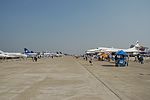
So it was not really a surprise that MAKS 2007, held from 21st to 26th August at the Russian Flight Test Air Base in Zhukovsky, stood in the light of a stronger-than-ever national Air- and Space Industry, while western exhibitors found themselves – contrary to previous years – squeezed together in just one single hall. 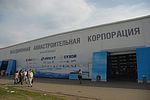
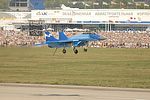
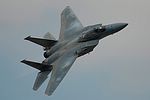
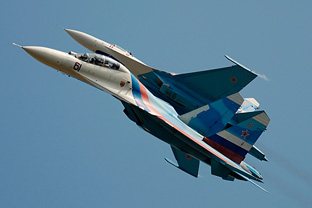
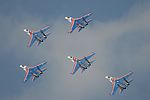
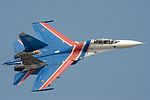
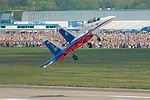
Another notable difference is the new unified structure of all major Russian Aerospace companies under the state-owned “United Aircraft Building Corporation” (UABC - in Russian: OAK), a Holding construct that has been founded in early 2006 and will in the foreseeable future unite and guide the bureaus of Mikoyan, Sukhoi, Irkut, Ilyushin, Tupolev and Yakovlev in their military as well as civilian efforts. Similar structures are also planned for the Space- , Weapons- and Helicopter-Production. The exceptional flying displays – enjoyed by more than 600,000 visitors – were thus dominated by “Flankers” and “MiGs” –with only two western components: The Patrouille de France and a F-15C Demo Team of the USAF. “Flanker” NewsSukhoi started the exhibition off with a success. On the 21st August, the Indonesian Air Force signed a contract – estimated value of USD 300 to 350 Million, delivery from 2008 to 2010 – for three Su-27SKM and Su-30MK2 each to complement their existing fleet of two Su-30MK and two Su-27SK. In the course of modernizing the Russian Air Force (Voenno-Vozdushmiy Sily - VVS), 20 Su-27SM will also be delivered till the end of year. 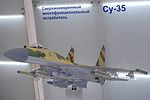
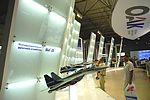
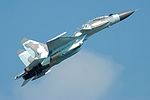
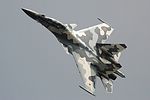
But the main program point for the military branch of Sukhoi definitely was the first-time presentation of the new Su-35 Multirole Prototype, a re-started program which is – due to extensive use of modern sensor, cockpit and flight control technology – marketed as potential “5th Generation Jet”. Its main strengths are an electronically scanning passive Phased-Array Radar with additional mechanical gimbal movement, a new cockpit dominated by two large MFDs and a wide-angle HUD, void of any analogue gauges – and two uprated AL-31F-M3 engines with 15,000kg of thrust (147.1 kN or 33,069 lb of thrust) each and 360° TVC which together with the new integrated flight control software should provide the pilot with a maximum of maneuvrability and a minimum of handling issues. Hopes for this type are to serve as interim solution for the Russian Air Force until the completely new designed “PAK-FA” – currently only a concept – materializes. MiG surprises with Stealth-UCAVIt came as a true surprise to western journalists when Mikoyan presented a life-size model of its unmanned flying-wing design nicknamed “Skat” (Stingray) on 23rd August. Two prototypes for flight- and weapons-tests are currently in production, with the first likely to be manned for initial certification and trials.
The subsonic “Skat“, one of two contenders in the Russian government’s search for an UCAV, carries its maximum payload of up to 2000kg (4,400 lb) in
two internal weapon bays with more than five meters length, and is supposed to have a range of up to 4000km (2,485 miles or 2,160 nm).
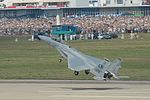
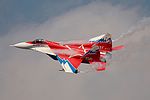
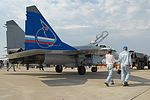
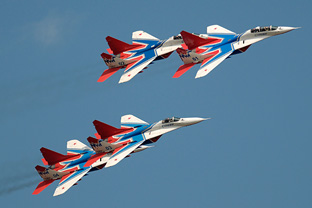
Another highlight of the exhibition for MiG was the first public appearance of the latest MiG-29K and twin-seat –KUB export derivatives, destined for service with the Indian Navy on aircraft carrier “Vikramaditya“ (former Russian Navy carrier “Admiral Gorshkov“, acquired by India in 2004). 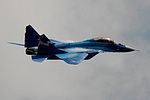
Compared to the legacy K-Version, the new design is lighter, with a larger wing area and uses less of the expensive specially welded structure parts found in earlier versions. The flight control system (FBW) is now fully digital in three axis but has a mechanical backup. The –KUB trainer is 90% identical with the –K and thus fully mission-capable, the second pilot taking on the role of weapons and radar officer. Both models shown at the show are pre-production aircraft currently undergoing system tests as well as weapons integration. 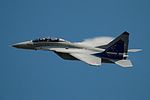
Next to these major news, MiG is still looking to acquire customers for the MiG-35 (formerly MiG-29M2 MRCA) and its MiG-AT advanced trainer (currently in development with more powerful engines), potential markets for both include India. As a whole, the export of Combat Jets and Armament has again seen a steady growth since 2006, and it is expected for this trend to continue into 2008. Rising demand in the civilian sector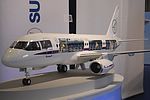
With the risen need for civil passenger- and airfreight capacity in Russia, and as a result of the state-directed efforts to open new areas of business for many defense companys, the national market for wide body aircraft is booming. Pretty much all of the well known design bureaus are working on civilian concepts or studies, with the cooperation between Sukhoi Civilian Aircraft Corporation and Alenia Aeronautica, announced on 22th August, for marketing and after-sales support of the Sukhoi “Superjet 100”, likely to become the most successful project. Rollout is expected to take place on 26th September, 2007, and orders are estimated to reach up to 100 aircraft till end of 2007. The Ukraine and Russia also once again confirmed plans to recommence production of the An-124 Ruslan – the largest transport aircraft to ever enter the commercial market– and expect up to 100 aircraft to be built until 2030. Russian companys are also increasingly active in the parts supplying business – the titan forge VSMPO-AVISMA signed a contract during MAKS 2007 together with Boeing for a Joint Venture delivering titanium parts for the Boeing 787 “Dreamliner”. VSMPO-AVISMA is also supplying similar parts for the Airbus A380, making it a partner in the construction of both most modern civil aircraft designs currently around. ConclusionWhile still a little way off from the high level and impact of the established western aerospace exhibitions in Le Bourget and Farnborough, the Moscow Salon has grown to a noticeable entity in the European area. Over half a million paying visitors and EUR 2 Billion (USD 2.74 Billion) expected total signed contract volume speak a clear word for the economical success of the largest eastern-European air show – and it definitely remains a special experience for any western Jet Fan. |
|
||||||||||||||||||||||||||||||||||

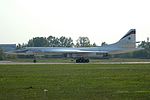
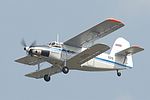
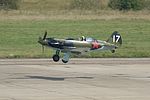
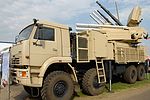
Report and photos by Helmut Skrdla ( view portfolio )
Last Modified: 27 July 2011
Update log:
07/27/11 Upgraded layout
09/13/07 Small fix
Home | Aircraft | Air Forces | Air Shows | Specials | Wallpapers | News | Quiz | Forum
Contact | About | FAQ | Updates | RSS Feeds | Links | Search
 Back to Index
Move to Top
Back to Index
Move to Top 
Copyright © 2002-2024 Niels Hillebrand. All Rights Reserved | Privacy & Cookie Policy | Terms of Service

