
Exercise Report : CRUZEX III

Leandro Maldonado reports on the third edition of CRUZEX, a large scale exercise held every two years in Brazil for South American air forces. The article is accompanied by a large gallery with pictures of the aircraft from Brazil, Argentina, Chile, France, Uruguay and Venezuela. See also the table at the end of the article to get an overview of the participants.
Introduction
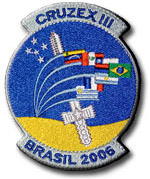
With over than 8,000,000 km² (5,000,000 sq miles) of dry land and more than 180 million inhabitants, Brazil is the biggest South America country and a powerful emerging nation. It commands the world's eleventh-largest economy and the country is becoming a regional leader and a very important player on global politics and economics issues.
Aspiring a permanent seat on an expanded United Nations Security Council , the Brazilian focus is changing outwards and it is moving to become a more active voice in the 21st century globalized world. Yet, Brazil is leading the UN peacekeeping contingent in Haiti and it keeps many more observers spread in hot spots around the world.
As the country searches to gain more importance on the global stage, its responsibility increases too. Brazil already foresees the possibility to work in conjunction with the NATO forces in the future and, naturally, it envisages employing not only its ground troops, but also its combat air assets. That was one of the reasons for the elaboration of the Exercício Cruzeiro do Sul (Exercise Southern Cross), best known as CRUZEX.
Overview
The exercise CRUZEX is the biggest South America Combat Training Exercise. It is hosted and managed by Força Aérea Brasileira (FAB – Brazilian Air Force) in cooperation with the other air forces attending to the exercise.
The planning for CRUZEX exercises began in 2001 with the invitation from the FAB to the others South American Air Forces to attend the exercise. The CRUZEX III commander, Lt-Brigadier William de Oliveira Barros, told the journalists some details about the operation planning and its objectives:
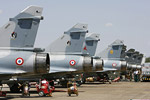
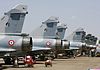
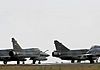
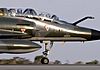
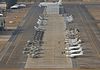
Line up of French Mirage 2000C/Ns.
“All South America countries are invited to attend the exercise, including the French territory of Guiana, and that is one of the reasons for France taking part in the exercise. Our goal is bringing South American Air Forces to work together in a smooth way and to assimilate different strategies from each other, so we can correct deficiencies, learn new concepts and prepare our forces to keep the peace being ready to war.”
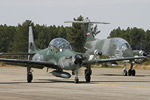
Many different aircraft are involved.
Normally about six months before the exercise take action FAB organizes a planning conference attended by the respective Project Officers of the foreigners air forces participating. Chaired by a FAB senior officer, the meeting seeks to establish the various training requirements of the individual nations attending as the basis for developing the exercise scenario. Each attending Air Force deciding the tactics to be employed, which type of aircraft it can deploy and the number of assets and personal to be sent. The information is afterwards passed to the Operations Division of the FAB, which develops an exercise plan and prepares the stage for the simulated war.
CRUZEX is based on a Blue versus Red Forces war and it is organized in a similar manner of Exercise Red Flag at Nellis AFB, Nevada. It is a two-week air war with two daily missions; one flown in the morning and one in the afternoon. The first week is the pre-exercise familiarisation with the second one being the live exercise or LIVEX.
CRUZEX History
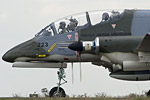
This time Uruguay also took part.
The First CRUZEX was staged at Canoas AB in southern Brazil in April/May 2002, and it was the first time ever the NATO procedures were used in a South American combined exercise. The first edition of the Exercise was attended by Air Forces from Argentina, Brazil, Chile and France and it was herald a success. FAB concluded that the exercise results were very satisfactory and paved the way for CRUZEX II.
Two years later, in November 2004, the air war was settled again. For CRUZEX II the Theatre of Operations (TO) have been relocated to the north east of Brazil and Natal AB was used as a main hub for the Blue Forces component. Argentina, Brazil, France and Venezuela attended the exercise, with Peru, Uruguay and South Africa present as observers. Around 100 aircraft were employed on the exercise and FAB once again considered it as a success.
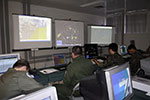
The exercise's DIREX office.
Intended to train the Coalition Forces to integrate United Nations Peace Missions, the structure of the exercise meets the NATO model. It is composed by the Direction of the Exercise (DIREX) headed by a Brazilian senior officer; the Co-Direction of the Exercise (CO-DIREX) composed by one senior officer from each Air Force; the Direction and Control of the Exercise Staff (DICONSTAFF) headed by a Brazilian senior officer; the Joint Force Air Component (JFAC) under a Brazilian senior officer command and the Deployable Combined Air Operations Centre (D/CAOC) headed by seniors officers from all participating Air Forces.
CRUZEX is fought between two notional countries which both countries having an inventory of assets and threats that can be either increased or progressively reduced trough war attrition over the course of the exercise. The director on DIREX monitors the participant’s performances and tailors the scenarios to meet the objectives set out at the planning conference.
At The Heart of Brazil
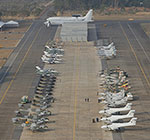
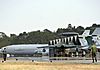
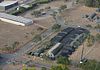
View of the Anapolis AB flight line.
Following the relocation culture of the exercise, CRUZEX III was held at the Centre-West region of Brazil with Anapolis Air Base receiving all foreigners’ air forces and hosting the Blue Forces components. Red Forces assets were based mainly at Campo Grande Air Base, 410NM south west from Anapolis, and formed exclusively by FAB aircraft. The Blue Coalition also had aircraft located at Brasília AB, Uberlândia, Goiânia and Jataí airports.
Located some 150 km southwest from Brasília, the country Capital, Anápolis AB was built in the seventies and it is strategically positioned in the very centre of Brazil.. Anápolis is one of the most important Brazilian air bases, first for its proximity to Brasilia and second for its central location, permitting any part of the country to be reached by defence aircraft in a short period of time.
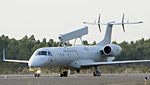
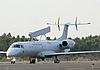
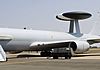
Embraer R-99A AEW aircraft.
Until 2001, Anápolis was known mainly by its resident supersonic Dassault Mirage III (F-103) of the 1º Grupo de Defesa Aérea (1º GDA - Air Defence Group). But since the Sistema de Vigilância da Amazônia (SIVAM - Amazon Surveillance System) became operational, five AWACS Embraer R-99A and three Remote Sensing Embraer R-99B from the 2º/6º GAv are operating from the base. The R-99 is the most advanced aircraft of FAB and Anápolis was chosen for its geographic location and also for its very dry air humidity conditions along the year, which helps preserve the very sensitive electronic equipment the aircraft carries on.
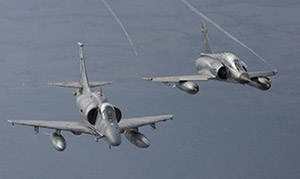
Argentine A-4AR Fighting Hawk and French Mirage 2000N in flight.
Background to the Conflict
The Exercise is a scenario featuring three fictitious nations: Red Land, which has invaded its ex-territory Yellow Land, and the Blue Land who supports the Yellow Land people. To push the Red Forces out of the invaded Yellow territory the Blue Land forms a coalition force with Argentina, Chile, Uruguay, Venezuela and France and goes to war against the Red Land.
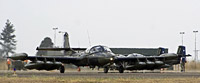
Unfortunately, these Chilean A-37 Dragonflies
were not joined by their Peruvian counterparts.
The Peruvian Air Force was intended to participate also, but sadly one of its aircraft crashed while in route to Anapolis AB, killing the Peruvian detachment commander Lt-Col Michael Eduardo Quiroz Plefke and its Air Operations Officer, Major Aldo Emilio Consiglieri Muñoz. The accident happened while one of the three Peruvian Cessna A-37 Dragonfly was taking-off from Porto Velho Air Base (north of Brazil) after a technical stop. After the accident the PAF officially quit the exercise and the two other aircraft returned home.
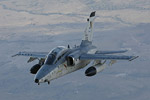
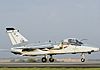
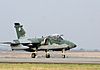
AMX A-1 ready to strike Red forces
which invaded Yellow country.
After World War Two, Red Country, which had fought on the losing side, lost part of its territory as a consequence of legitimate international arbitration favourable to the victorious countries. As a result, Yellow Country appeared between Red and Blue countries. Some of the Red population have not accepted their country’s division and still live in Yellow Country, near Santa Vitória, União de Minas, Limeira do Oeste e Iturama, with a strong political position against the Yellow Country’s government.
In 1970, a petroleum field was discovered in yellow Country and several multi-national companies established themselves there, bringing wealth and a higher standard of living to the population. The Yellow and Blue countries signed several bilateral commerce treaties, further developing their economies.
The Government of Red Country then decides to adopt an ultra-nationalist policy and invades Yellow Country – much of the Yellow population spills out into Blue Country. Red Country is given an ultimatum to leave Yellow Country by midnight on August 15. With no movement, the Blue Forces, with a coalition force, set about defeating the Red Forces and pushing them back into Red Country, allowing the people of Yellow Country to return.
So, the war begins…!
Red and Blue Forces
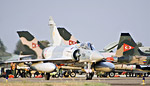
AdlA Mirage 2000C passing line up
of Venezuelan F-16s and VF-5s
The exercise had three distinct phases: the Pégasus Exercise ran from August 14 to 18. It was a simulated computer exercise used to test the developing of the real exercise. From August 21 to 25 took place the Familiarisation Flights (FAM) and the Forces Integration Training (FIT) and between August 28 to 31 the LIVEX. During the four days of LIVEX two missions were flown per day with a pack, so called Combined Air Operation (COMAO), composed of around 40 aircraft each. The first two days were dedicated to gain air supremacy and the left two ones for ground attack, Counter Insurrection (COIN) and Combat-Search and Rescue (CSAR) missions.
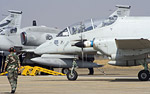
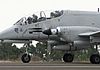
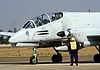
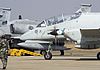
Argentine IA-58 and A-4AR
While the Red Forces had six Northrop F-5EM air defence fighters, five Aermacchi/Embraer A-1 attack fighters, one Embraer R-99A AWACS, one Lockheed KC-130 Hercules and a sole Bell H-1H Huey, the Blue coalition were formed by 89 combat aircraft (six Northrop F-5E, six A-1, three RA-1, four Embraer AT-26, five Embraer A-29, four Dassault Mirage 2000C RDI, four Dassault Mirage 2000N, three Northrop VF-5, three Lockheed F-16, three Dassault Mirage 50, three Douglas A-4AR, six FMA IA-58 and nine Cessna A-37), three AWACS aircraft (one Boeing E-3F and two R-99A) and one Boeing KC-707, two Boeing KC-137 and one KC-130 providing air refuelling support.
The Blue Forces had also 27 more aircraft including one Aerospatiale H-34 Super Puma, two Helibras H-50 Esquilo, one Embraer SC-95 and four Embraer AT-27 based in Uberlândia, capital of the Yellow Land plus two Combat Search and Rescue (CSAR) H-1H helicopters on alert in Jataí, on the Blue Country.
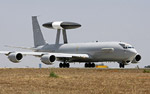
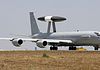
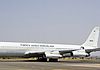
AdlA E-3F AWACS on the runway.
The flight routine normally began at 0830hrs local time with the departure of two R-99A and one E-3F. One hour latter the first COMAO was airborne and heading south west, it was followed by COMAO-2 few minutes latter. Each COMAO was composed by different types of aircrafts having distinct missions. By 1200hrs the COMAO-1 began landing with the COMAO-2 few minutes behind it. The two R-99A were back by 13:00 while the E-3F endured 9hrs flight mission returning at 17:30h. The afternoon flights were conducted the same as the early ones and by 1530hrs all COMAOs were already airborne and on route to their targets.
To control the huge exercise air space and to manage all traffic on it, DIREX used the NATO Stradivarius Mission Task and Monitoring software brought by France. The exercise area comprehended 214,970 sq miles with the air corridor created for the exercise having some 518 miles (833 km) by 415 miles (668 km) long. During the exercise no civilian traffic were diverted and only short delays changed the area traffic routine.
Future Exercises
Speaking to the author’s about future CRUZEX exercises, Col Carlos Minelli de Sá, Senior Operation Officer of DIREX said:
“We are very enthusiastic with the exercise and we plan to still improving it. All participants were very satisfied with the experience gained here and we look forward to be ready to deploy our forces in a real threatre when it became necessary.”
“Beyond the military experience gained, the exercise gives us the opportunity to interact with our fellow comrades, minimize and break cultural differences existing between us. It enforces the ties that hold our friendship and spread the trusty feelings existing between our nations.”
“I do not discard the possibility of one future CRUZEX be hold on another South America’s country instead of Brazil. It will depend on the capacity of the host country to plan and coordinate such exercise and also the air space available for the combat training exercise.”
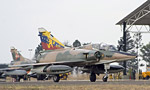
For the FAV, Su-30s might take over
from the Mirage 50 in CRUZEX IV.
Three countries were present as observers this year, Bolivia, Colombia and Paraguay and it is expected they can attend future exercises and we may see a larger than this year Combined Force gathered in Brazil. Future CRUZEX also can reserves surprises with new aircraft attending the next exercises. In a future exercise may we see Mirages 2000C, Rafales, F-16s and Sukhois playing together. It can be a really very impressive meeting. Let’s wait for it!
The author would like to thank the CECOMSAER Vice Commander Coronel Machado and his senior staffs Ten-Coronel Fagundes, Ten-Coronel Henry and Major Gomes da Silva for their support and cooperation in preparing this article. Also thanks to Major Fabio Leite (COMGAR) and all Brazilian and foreign participants. Finally thanks to Cyril Amboise (SIRPAAir) for providing additional photos.
 |
 |
 |
 |
 |
 |
 |
 |
 |
 |
 |
 |
 |
 |
 |
 |
 |
 |
 |
 |
 |
 |
 |
 |
 |
 |
 |
 |
 |
 |
 |
 |
 |
 |
 |
 |
 |
 |
 |
 |
 |
 |
 |
 |
 |
 |
 |
 |
 |
 |
 |
 |
 |
 |
 |
 |
 |
 |
 |
 |
 |
 |
 |
 |
 |
 |
 |
 |
 |
 |
 |
 |
 |
 |
 |
 |
 |
 |
 |
 |
 |
 |
 |
 |
 |
 |
 |
 |
 |
 |
 |
 |
 |
 |
 |
 |
 |
 |
 |
 |
 |
 |
 |
 |
 |
 |
 |
 |
 |
 |
 |
 |
 |
 |
 |
 |
 |
 |
 |
 |
 |
 |
 |
 |
 |
 |
 |
 |
 |
 |
 |
 |
 |
 |
 |
 |
 |
 |
 |
 |
 |
 |
 |
 |
 |
 |
 |
 |
 |
 |
 |
 |
 |
 |
 |
 |
 |
 |
 |
 |
 |
 |
 |
 |
 |
 |
 |
 |
 |
 |
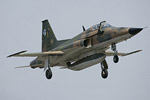
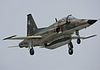
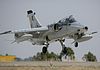
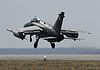
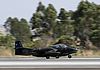
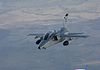
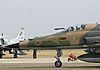
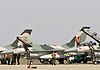
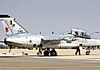
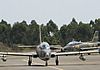
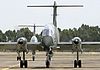
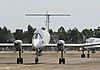
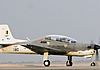
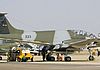
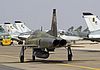
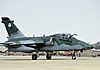
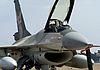
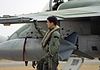
Brazilian F-5E Tiger II
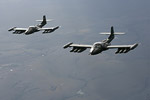
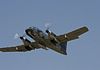
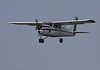
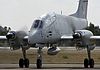
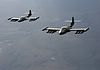
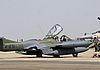
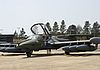
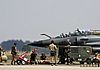
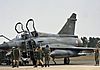
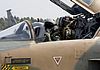
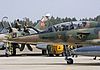
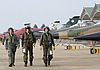
Two A-37 Dragonfly in flight

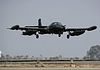
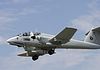
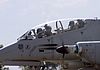
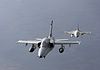
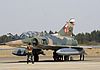
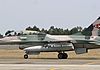
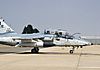
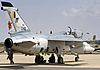
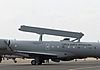
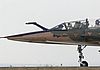
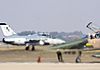
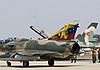
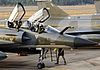
FAV Mirage 50BV two-seater
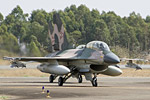
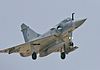
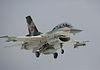
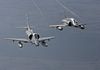
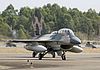
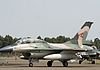
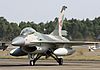
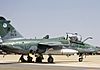
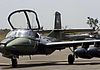
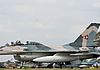
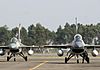
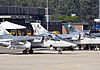
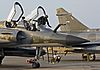
Two F-16As from Venezuela
| I. PARTICIPATING BLUE FORCES | |||||||
| BRAZIL | |||||||
| Sqn/ Unit | Nº | A/C Type | Daily Sorties | Roles | Base | AAR Type | Call Sign |
| 1º GAv CA | 6 | F-5E | 2 | AD/STRIKE | ANÁPOLIS | KC-130/KC-137 | JAMBOCK |
| 1º/16º GAv | 3 | A-1 | 2 | STRIKE | ANÁPOLIS | KC-130/KC-137 | ADELPHI |
| 1º/10º GAv | 3 | RA-1 | 2 | RECCE/STRIKE | ANÁPOLIS | KC-130/KC-137 | POKER |
| 3º/10º GAv | 3 | A-1 | 2 | STRIKE | ANÁPOLIS | KC-130/KC-137 | CENTAURO |
| 2º/6º GAv | 3 | R-99A | 2 | AEW | ANÁPOLIS | n/a | GUARDIÃO |
| 2º/3º GAv | 5 | A-29 | 2 | STRIKE | ANÁPOLIS | n/a | GRIFFO |
| 1º/4º GAv | 4 | AT-26 | 2 | STRIKE | ANÁPOLIS | n/a | PACAU |
| 3º/8º GAv | 1 | H-34 | - | SAR | ANÁPOLIS | n/a | PUMA |
| 1º/1º GT | 1 | KC-130 | 2 | AAR | BRASÍLIA | n/a | BARÃO |
| 2º/2º GT | 1 | KC-137 | 2 | AAR | BRASÍLIA | n/a | CORSÁRIO |
| GTE | 1 | HS-125 | - | MEDVAC | BRASÍLIA | n/a | ANJO |
| 3º/8º GAv | 1 | H-34 | 1 | CSAR | UBERLÂNDIA | n/a | PUMA |
| 3º/3º GAv | 4 | AT-27 | 1 | RESCORT | UBERLÂNDIA | n/a | FLECHA |
| 2º/10º GAv | 1 | SC-95 | - | SAR | UBERLÂNDIA | n/a | PELICANO |
| 2º/8º GAv | 2 | H-50 | 1 | CSAR | UBERLÂNDIA | n/a | POTI |
| 2º/10º GAv | 2 | H-1H | - | SAR | JATAÍ | n/a | PELICANO |
| ARGENTINA | |||||||
| Sqn/ Unit | Nº | A/C Type | Daily Sorties | Roles | Base | AAR Type | Call Sign |
| G5C | 3 | A-4AR | 2 | STRIKE | ANÁPOLIS | KC-130/KC-137 | HALCON |
| G3A | 3 | IA-58 | 2 | STRIKE | ANÁPOLIS | n/a | TERO |
| FRANCE | |||||||
| Sqn/ Unit | Nº | A/C Type | Daily Sorties | Roles | Base | AAR Type | Call Sign |
| EC02.012 | 4 | MIRAGE 2000C RDI | 2 | AD/STRIKE | ANÁPOLIS | KC-137 | PASTIS |
| EC01.004 | 4 | MIRAGE 2000N | 2 | STRIKE | ANÁPOLIS | KC-137 | RICARD |
| 36 EDCA | 1 | E-3F | 1 | AEW | ANÁPOLIS | n/a | CYRANO |
| VENEZUELA | |||||||
| Sqn/ Unit | Nº | A/C Type | Daily Sorties | Roles | Base | AAR Type | Call Sign |
| G-16 | 3 | F-16 | 2 | AD/STRIKE | ANÁPOLIS | n/a | DRAGON |
| G-11 | 3 | MIRAGE 50 | 2 | STRIKE | ANÁPOLIS | KC-137 | DIABLO |
| G-12 | 2 | VF-5 | 2 | STRIKE | ANÁPOLIS | KC-130/KC-137 | GRIFO |
| G-06 | 1 | KC-707 | 1 | AAR | ANÁPOLIS | n/a | PEGASO |
| CHILE | |||||||
| Sqn/ Unit | Nº | A/C Type | Daily Sorties | Roles | Base | AAR Type | Call Sign |
| G. AV. Nº 12 | 6 | A-37 | 2 | STRIKE | ANÁPOLIS | KC-707 (drogue) KC-135/KC-137 | ACERO |
| URUGUAY | |||||||
| Sqn/ Unit | Nº | A/C Type | Daily Sorties | Roles | Base | AAR Type | Call Sign |
| EA-2 | 3 | A-37 | 2 | STRIKE | ANÁPOLIS | KC-130 | ALFA |
| EA-1 | 3 | IA-58 | 2 | STRIKE | ANÁPOLIS | n/a | FORTIN |
| © 2006 Leandro Maldonado | |||||||
| II. PARTICIPATING RED FORCES | |||||||
| BRAZIL | |||||||
| Sqn/ Unit | Nº | A/C Type | Daily Sorties | Roles | Base | AAR Type | Call Sign |
| 1º/14º GAv | 6 | F-5M | 2 | AD | CAMPO GRANDE | KC-130 | PAMPA |
| 1º/16º GAv | 5 | A-1 | 2 | STRIKE | CAMPO GRANDE | KC-130 | ADELPHI |
| 2º/6º GAv | 1 | R-99A | 2 | AEW | CAMPO GRANDE | n/a | GUARDIÃO |
| 1º/1º GT | 1 | KC-130 | 2 | AAR | CAMPO GRANDE | n/a | GORDO |
| 2º/10º GAv | 1 | H-1H | - | SAR | CAMPO GRANDE | n/a | PELICANO |
| © 2006 Leandro Maldonado | |||||||
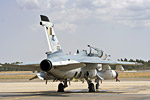
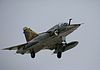
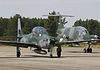
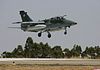
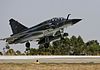
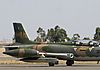
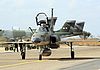
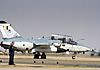
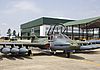
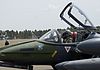
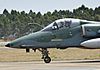
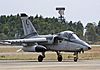
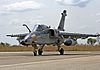
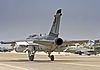
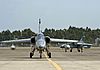
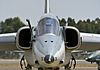
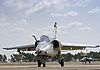
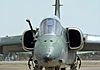
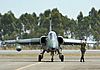
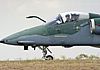
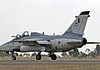
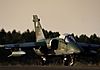
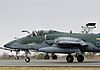
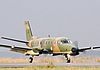
Brazilian AMX
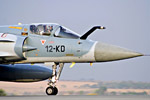
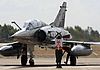
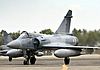
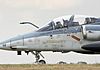
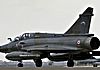
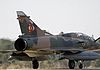
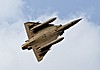
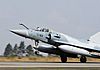
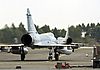
French Mirage 2000C
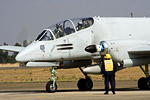
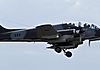
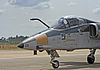
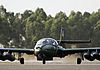
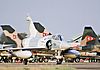
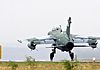
IA-58 Pucára from Argentina
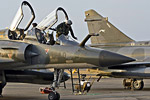
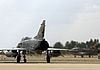
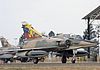
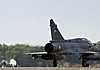
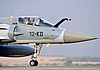
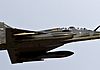
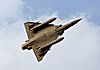
AdlA Mirage 2000N fighter-bomber
Report by Leandro Maldonado. Photos by Leandro Maldonado and Cyril Amboise - SIRPA Air / AdlA
Last Modified: 10 April 2013
Update log:
10 Apr 2013 Revised layout
10 Apr 2013 Merged pages into one
Home | Aircraft | Air Forces | Air Shows | Specials | Wallpapers | News | Quiz | Forum
Contact | About | FAQ | Updates | RSS Feeds | Links | Search
 Back to Index
Move to Top
Back to Index
Move to Top 
Copyright © 2002-2024 Niels Hillebrand. All Rights Reserved | Privacy & Cookie Policy | Terms of Service

