
Photo Report : Remaining DHC-1 Chipmunks in the FAP

|
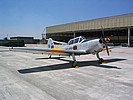
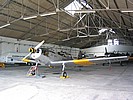
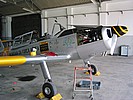
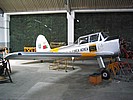
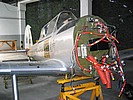
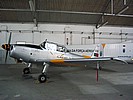
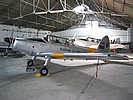
The DHC-1 Chipmunk was the first aircraft indigineously designed by the de Havilland Canada company, a subsidiary of the de Havilland Aircraft company since 1928. It flew for the first time at Downsview, Toronto on May 22, 1946. Despite the crash of the second prototype on January 19, 1947 after failing to recover from a spin, deliveries of production aircraft to the Royal Canadian Air Force (RCAF) commenced in 1948. The DHC-1 replaced the Tiger Moth in the basic training role in both the RCAF and Royal Air Force (RAF) serving respectively until 1971 and 1997. The Portuguese Air Force (Força Aérea Portuguesa - FAP) was one of the many other operators of the DHC-1 Mk.20. Ten aircraft were acquired from de Havilland (UK) in 1951 to succeed the Tiger Moth at that time in service with the Arma de Aeronáutica. On 1st of July 1952 the Força Aérea Portuguesa was founded, and in the same year Indústria Aeronáutica de Portugal (Aircraft Industries of Portugal, later OGMA) started the licensed production of 60 aircraft. In 1961 the another batch of six were produced. The fleet of a total of 76 aircraft served in the elementary and basic pilot training role for many years. In 1989 the Aerospatiale Epsilon TB-30 entered service with the FAP, gradually taking over the training role. In 1997, 30 DHC-1 aircraft remained of which seven were selected for continued service with the Academia da Força Aérea (Air Force Academy (AFA) at Sintra AB. They were re-built by OGMA that year, receiving a more powerful engine (145 to 180 Hp), new brakes, new radios, transponders, anti-vrille fins, and the original colors with the emblem and inscription of the Air Force Academy. The others found their way into museums, private owners or the scrapyard. Esquadra 802 (802 squadron) is the unit which operates the DHC-1 for the AFA. The aircraft are used as glider tugs and also for elementary pilot training. Today six of the Chipmunks remain one having been written off in 1998. In 2001 the aircraft received a commemorative marking on the nose to celebrate the 50 years of Chipmunk service in the Portuguese Air Force (1951-2001). The table displays the last seven DHC-1 Chipmunks, for a total list of all 76 aircraft in Portuguese service see this website. |
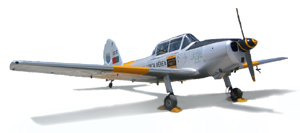 All Photos by Luis Proença |
||||||||||||||||||||||||||
|
|||||||||||||||||||||||||||
|
|||||||||||||||||||||||||||
| |||||||||||||||||||||||||||
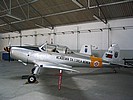
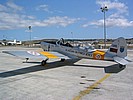
Report and photos by Luis Proença (contact and more photos at jetphotos.net)
Last Modified: 28 March 2013
Home | Aircraft | Air Forces | Air Shows | Specials | Wallpapers | News | Quiz | Forum
Contact | About | FAQ | Updates | RSS Feeds | Links | Search
 Back to Index
Move to Top
Back to Index
Move to Top 
Copyright © 2002-2024 Niels Hillebrand. All Rights Reserved | Privacy & Cookie Policy | Terms of Service

