

Royal Netherlands Air Force History
History 1913-1945
1913 - Foundation Dutch Army Aviation Department
On 16 April 1913 Her Majesty Queen Wilhelmina of the Netherlands signed
Koninklijk Besluit nummer 29 (Royal Decision number 29) that
a Luchtvaartafdeling (LVA - Aviation department) was to be founded
within the Koninklijke Landmacht (Royal Army) on first of July 1913.
Captain H. Walaardt Sacré would be the commander of the LVA, its four pilots
and an sergeant-major-administrator. The LVA started with one car and one
rented aircraft de Brik, which was an improved Farman biplane
design by Marinus van Meel. Soon afterwards the aircraft was bought and
became the first military owned aircraft in the Netherlands. The LVA
was based at Soesterberg near Utrecht, the Vliegkamp Soesterberg
airfield consisted of an area of heath as runway and a couple of wooden sheds.
On 30 May 1914 Proefvliegafdeling Militaire Luchtvaart (Trail
aviation department Military Aviation) was founded as part of the
Koninklijk Nederlands Indisch Leger (KNIL - Royal Dutch Indian Army) based in
the Dutch Indies. (independent Indonesia of today used to be part of the Dutch empire)
1914-1918 - First World War
When on 14 August 1914 the first World War began consisted
the LVA of 10 officers and 31 other personnel. The fleet consisted
of nine aircraft, seven Farman biplanes and two Van Meels biplanes.
Although the Netherlands was neutral during the war, after mobilisation
of the Army the LVA flew many sorties patrolling the country borders.
The aircraft production was effected by the war, and two aircraft on order
could not be delivered. However a total of 107 forein airplanes were captured
after they made emergency landings in the Netherlands.
1918-1939 - LVA between wars
At the end of World War One, the LVA consisted of 110 aircraft
and 300 personnel. The department was reduced to a 'peace organisation'
heavily reduced in number and limited to the reconnaissance mission.
However in 1930s the fear of war increased because of Hitler, German re-arming
and general restless feel in Europe. The government dediced the rise the
defense budget starting in 1935. The LVA fleet of reconnaissance aircraft
was soon strengthened by Fokker G-I and D-XXI fighter/escorts, Fokker T-V bombers
and the American Douglas DB-8A-3N light bomber/recce airplane.
On 1 July 1939 the LVA was renamed Wapen der Militaire Luchtvaart
(Weapon of Military Aviation) and transformed into an aviation brigade, which consisted
of three aviation regiments. Earlier on 30 March 1939 the aviation department of the
KNIL was converted into an independent air arm designated ML/KNIL (ML standing for
Militaire Luchtvaart or Military Aviation)
1939-1945 - Second World War
At the start of World War Two on 1 September 1939, only 125 combat-ready aircraft
were available to the Netherlands. Although the Netherlands was hoping to remain
neutral, it was attack by Germany on 10 mei 1940. Germany deployed about 1000
aircraft of the Luftwaffe and gained air superiority on the first day. The Luftwaffe
lost about 350 aircraft, the Netherlands 94. When on 14 May 1940 Germany heavily
bombed the major Dutch city of Rotterdam, the Netherlands surrendered.
However the fight was not over, like the government and royal family, many Dutch
young man succeeded in fleeing to the United Kingdom. In June 1940 the first Dutch
squadron was formed, 320 Squadrons Royal Naval Air Service was formed and its fleet
consisted of Fokker T-VIIIW, then the Lockheed Hudson, and finally the North American B-25 Mitchell.
When the Casteltown based RAF 167 Squadron with several Dutch pilots was transferred to
airfield Woodvale near Liverpook, it was renamed 322 (Dutch) Squadron RAF. Equipped
with Spitfires, the squadrons was deployed for air defense of the British airspace,
especially against V-1 rockets. The squadron also carried out ground attacks
supporting allied troops in their advance, following the landings in Normandy.
On 26 juli 1944 the Netherlands government based in Londen founded the
Directoraat der Nederlandse Luchtstrijdkrachten (DNLSK - Dutch Air Force Command).
It consisted of the Militaire Luchtvaart and the ML/KNIL
as well as the Marineluchtvaartdienst (MLD - Naval Aviation Serivce).
The DNLSK gained command over the Dutch personnel in the RAF and signed agreements with the
British Air Ministry for the training, organisation and equipment of the Dutch air forces.
History 1945-1989
1945-1950 - Entering the Jet Age
After the war a lot of effort was spent to build up the Dutch military. It was not
until 1946 that the first airfields were available for use again, and only in
1947 pilot training restarted.
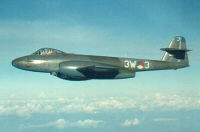
On 28 June 1948 the first three Gloster Meteor jet fighters were entered Dutch military service
at Twenthe AB. Soon air defense squadron Nr.1 Squadron was formed, later renamed to
323 Squadron. On 28 January 1949 the first eight Meteors flew to Leeuwarden AB when
the squadrons moved there. Leeuwarden AB became the first real jet airbase of the Netherlands.
On 17 March 1948 the Netherlands, Belgium, Luxembourg, France and the United Kingdom
sign the Treaty of Brussels to organise a collective defense in the form of the
Western Defense Union, which was succeeded by the West-European Union (WEU). On 4 April
1949 the Netherlands signed the North-Atlantic Treaty, which would form the bases for
the NATO.
1950-1953 - NATO and RNLAF
At the end of 1950 NATO top decided that the Netherlands would need to be
equipped with tactical air arms. This was realised in 1952 with the creating
of the Commando Tactische Luchtstrijdmachten (CTL - Tactical Air Force Command).
It was also decided that the training of Dutch pilots would take place in the United States.
On 11 March 1953 Her Majesty Queen Juliana signed the Royal decision, which would
give the Koninklijk (Royal) title to the air force, the Koninklijke Luchmacht (KLu - Royal Netherlands Air Force)
was born. The KLu would be equal and independent armed force aside the Royal Army and Royal Navy.
1953-1989 - Cold War Era
During the Cold War the RNLAF tactical squadrons would operate in the
NATO Second Allied Tactical Air Force (2ATAF). The weapon systems
of the RNLAF were integrated in the European defense against the
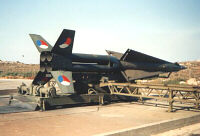
forces of the Warchau Pact. Dutch Nike surface-to-air missile were
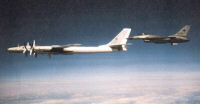
deployed in Germany and Dutch fighters intercepted Tupolev bombers
on a few occasions.
The RNLAF took part in major exercises with other NATO countries to
train skills and cooperation, for example Red Flag at Nellis AFB in Nevada, USA.
Because of the increasing densely populated Europe, it was neccessary to
conduct low flying training outside Europe. For this, the RNLAF annually deployed
a number of fighters to Goose Bay, Canada. Also the Groep Geleide Wapens
(GGW - Group Guided Weapons) annually deployed to the NAMFI Range on Crete, Greece
to practise its air defense skills using the Nike Hercules and Hawk missile systems.
The RNLAF also deployed for operations outside NATO command. In the 1960s the
air force deployed to the crises situation around Dutch New-Guinea.
322 Squadrons embarked on the HMS Karel Doorman carrier which took the
aircraft to the island of Biak where 322 would be based to provide air defense.
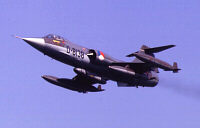
Another operation during this period, was the intervention of six F-104 Starfighters
from Leeuwarden AB during the train hi-jack at De Punt in 1977. The noise
produced by the low passes of the F-104 Starfighters, made the hi-jackers panic.
This enabled Royal Navy Marines and police personnel to supprise attack the hi-jackers
and end the drama for the hostages.
336 Squadrons deployed to airfield Hato on Curaçao with two Fokker F-27M Maritime Patrol aircraft
to assist civil and military surveillance, transport and search and rescue missions.
History 1989-2004
1989-2001 - Peace Keeping & Enforcing
After the fall of the Berlin wall in November 1989 and the subsequent fall of the Soviet Union,
the threat of a communist attack dissappeared. The RNLAF was reformed for the
many new tasks it would have to perform besides air defense. NATO transformed into
an organisation to solve over the world conflicts and assisting the UN. 'Air Power'
became an instrument for international politics. 'Out of Area' operations, deployability,
flexibility and mobility replaced the static defense strategy.
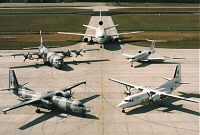
The transport fleet of Fokker F-27 aircraft was modernised by replacing them with
modern Fokker 60 military transport and Fokker 50 VIP planes. The tactical range of the RNLAF
was greatly improved with the arrival of two C-130H-30 Hercules medium transports.
Later in the 1990s the KLu also received two ex-Martinair DC-10 airliner, which were converted
to tanker retaining a part of their passenger and cargo carrying capability.
The Groep Geleide Wapens (GGW) returned to the Netherlands and was permanently
based at De Peel AB in the south-east region of the country. In 1991 the RNLAF deployed
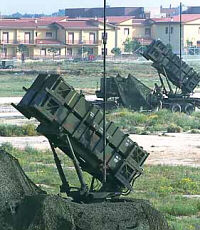
the 3rd and 5th GGW with Patriot and Hawk missiles to Turkey to protect Diyarbakir against
attack by Iraqi SCUD missiles. Patriot missiles were also deployed to Israel to defend
Jerusalem against SCUD attacks. In 2003 the Patriots were again deployed to Turkey.
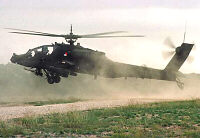
In 1993 the Dutch army helicopters were now officially part of the RNLAF. The RNLAF would maintain
and operate the helicopters is support of army operations. The Tactische Helicopter Groep (THG -
Tactical Helicopter Group) was formed and new transport helicopters (Chinook, Cougar) as well as
the AH-64 Apache were acquired in the second part of the 1990s. Together with the Lucht Mobiele
Brigade (Air Mobile Brigade) of the Royal Army the THG forms the 11 Air Manoeuvre Brigade.
From 12 April 1993 until 20 December 1995 RNLAF F-16s were part of the NATO fleet for operation Deny Flight.
Operation Deny Flight enforced the no-fly zone above Bosnia-Herzegovina as imposed by the United Nations.
Besides air defense missions, the Dutch F-16 would also take part in missions in the Balkan region
delivering close air support to UN troops and aerial reconnaissance missions. Several F-16s also took part
in operation Deliberate Force, a NATO-led air campaign in end summer 1995 which resulted in the signing of the Dayton
treaties in December 1995.
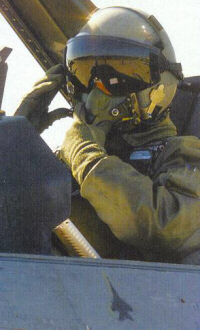
In 1999, the RNLAF participated in operation Allied Force in Kosovo, which was also the operational debut for the
upgraded F-16AM. Just a few hours into the operation a Dutch F-16AM from 322 Squadron successfully engaged a Serbian MiG-29
'Fulcrum' with a medium range AIM-120 AMRAAM. Besides the CAP mission, also offensive bombing and photo reconnaissance
missions were flown. The KDC-10 tankers refuelled allied fighter over the Adriatic Sea. C-130 Hercules transports flew
daily sorties from Eindhoven AB to logistical support the operation. RNLAF aircraft flew 1.194 sorties during operation
Allied Force, which is about 7.5% of the total 37.000 sorties flown.
2001-2004 - Terrorist Threat
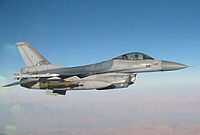
RNLAF supported Operation Enduring Freedom in Afghanistan, which was initiated by the United States
following the terrorists attacks on the World Trade Center. Six F-16s, one KDC-10 tanker and some 440
personnel were deployed to Manas airport in Kirgyzstan as part of the European Participating Air Force
(EPAF) together six Danish and six Norwegian F-16s. Starting 1 October 2002, the deployment was prolonged
on 1 April 2003 to 1 October 2003, although the KDC-10 left in March. On several occasions LGBs were
dropped in action against Al Qaeda and Taliban forces.
In 2003 after the US/UK invasion of Iraq, the RNLAF has deployed four CH-47D Chinook helicopters
to support the Dutch marines currently based in the country for security. They will continue to be
based here in 2004. In 2004 a Fokker 60 military transport has been deployed to Jordan as requested
by the United Nations Humanitarian Air Service. The aircraft will provide the UN World Food Program (WFP)
transport capacity flying between Amman in Jordan and the Iraqi cities of Basra, Erbil and Bagdad.
Sources used: Koninklijke Luchtmacht: Taak en Organisatie: Historie
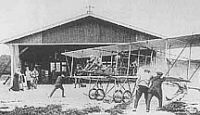
Van Meels biplane at Soesterberg
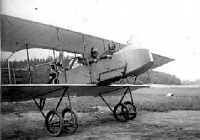
Farman Biplane
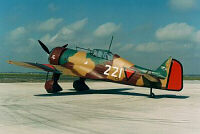
Fokker D.XXI
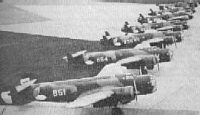
Fokker T-V bomber
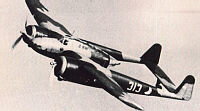
Fokker G-I
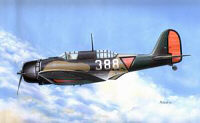
Douglas DB-8A-3N bomber/recce
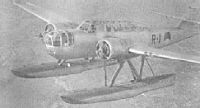
Fokker T-VIIIW
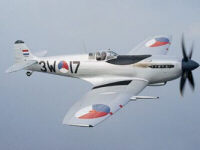
Dutch Spitfire
Gloster Meteor
North Atlantic Treaty Organisation
Nike Hercules missile
F-84 Thunderjet
F-104 Starfighter
Tu-95 Bear intercepted by KLu F-16
Transport fleet
Patriots in Turkey
KLu AH-64 Apache
F-16 with MiG-29 kill mark
F-16 over Afghanistan
 Back to Index

